One order. Five screens. The same catalog the whole way through.
Here is what actually happens between a customer deciding what they want and the money landing in your account.
The order comes in
A customer orders from the self-order kiosk, your online store, or at the counter. All three write to the same cart, the same catalog, and the same tax rules — there is no separate system to keep in sync.
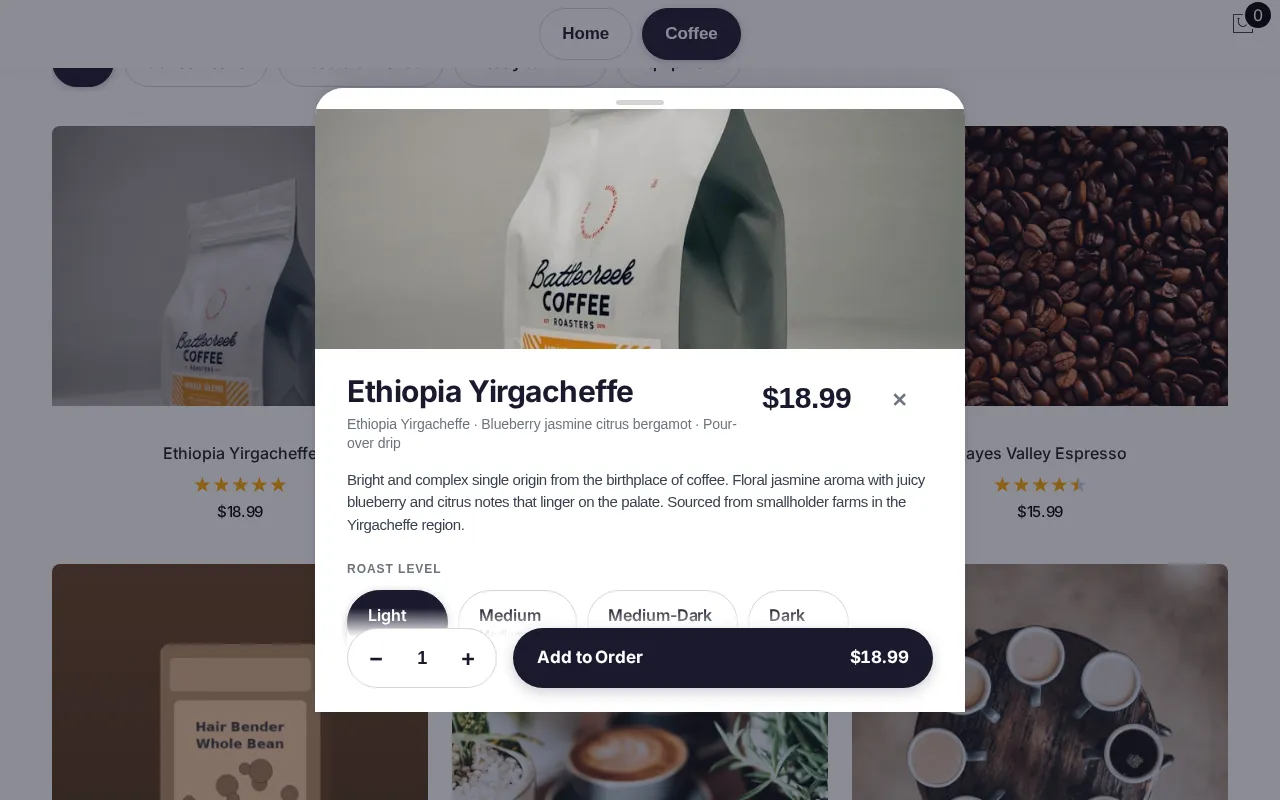
The kitchen sees it the moment it is sent
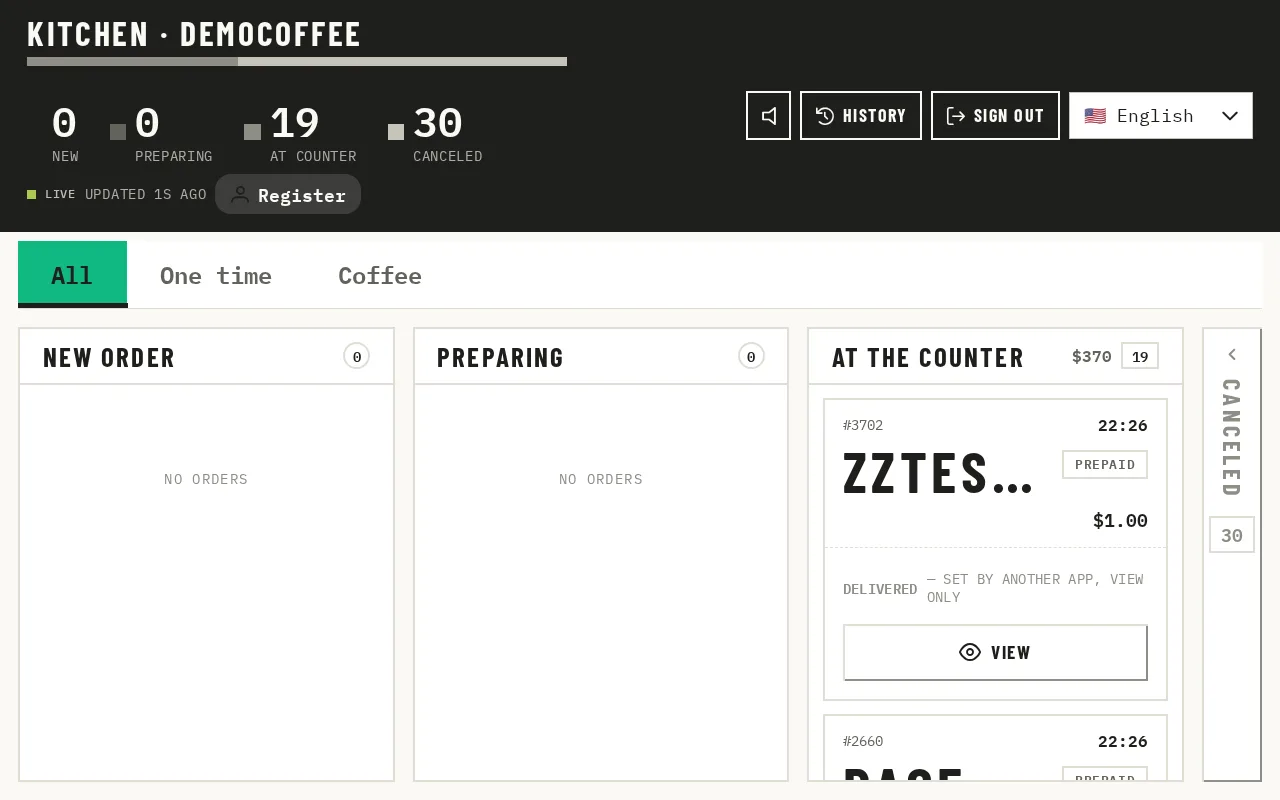
The kitchen screen shows every order as soon as it is placed — new, preparing, or ready at the counter — with a running timer so nothing sits forgotten.
The register takes the payment
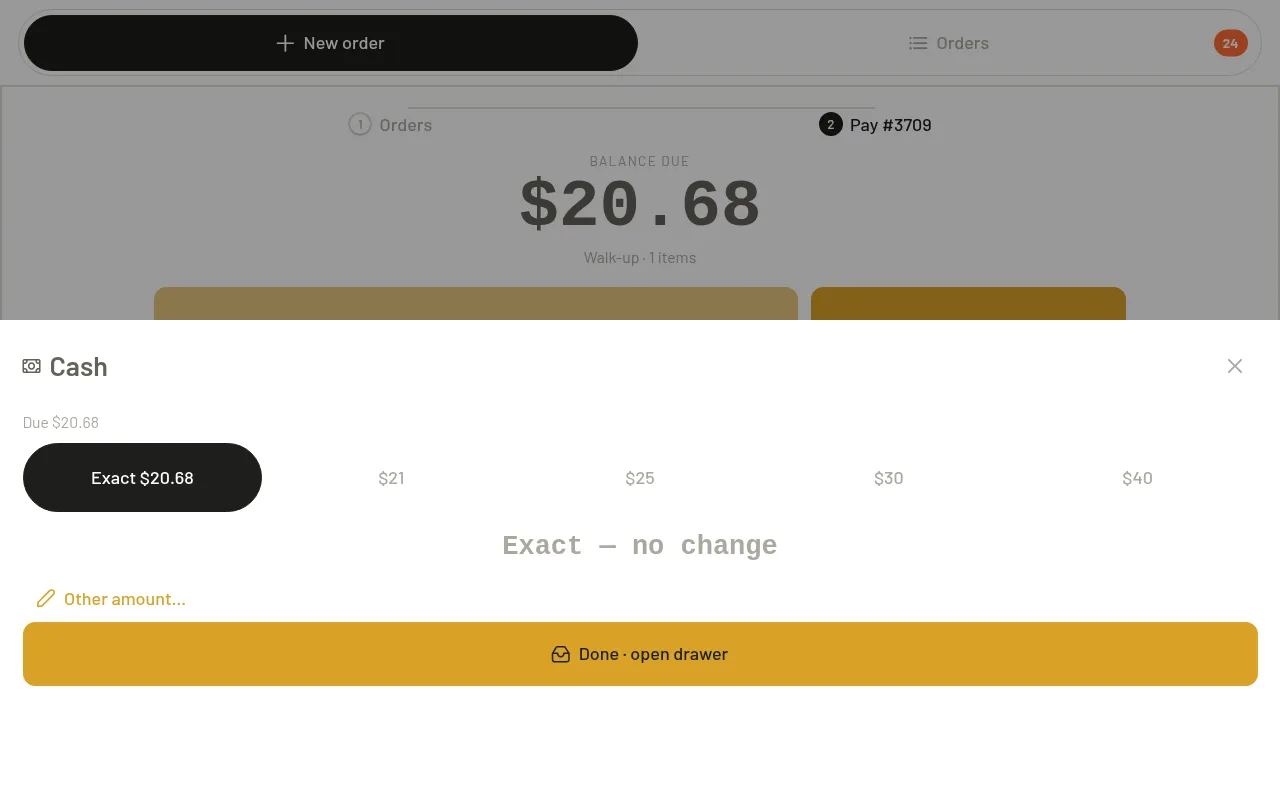
Card on a Stripe Terminal reader — the register never touches the card number — cash with the change worked out automatically, or a split between the two.
The boards already show today's prices
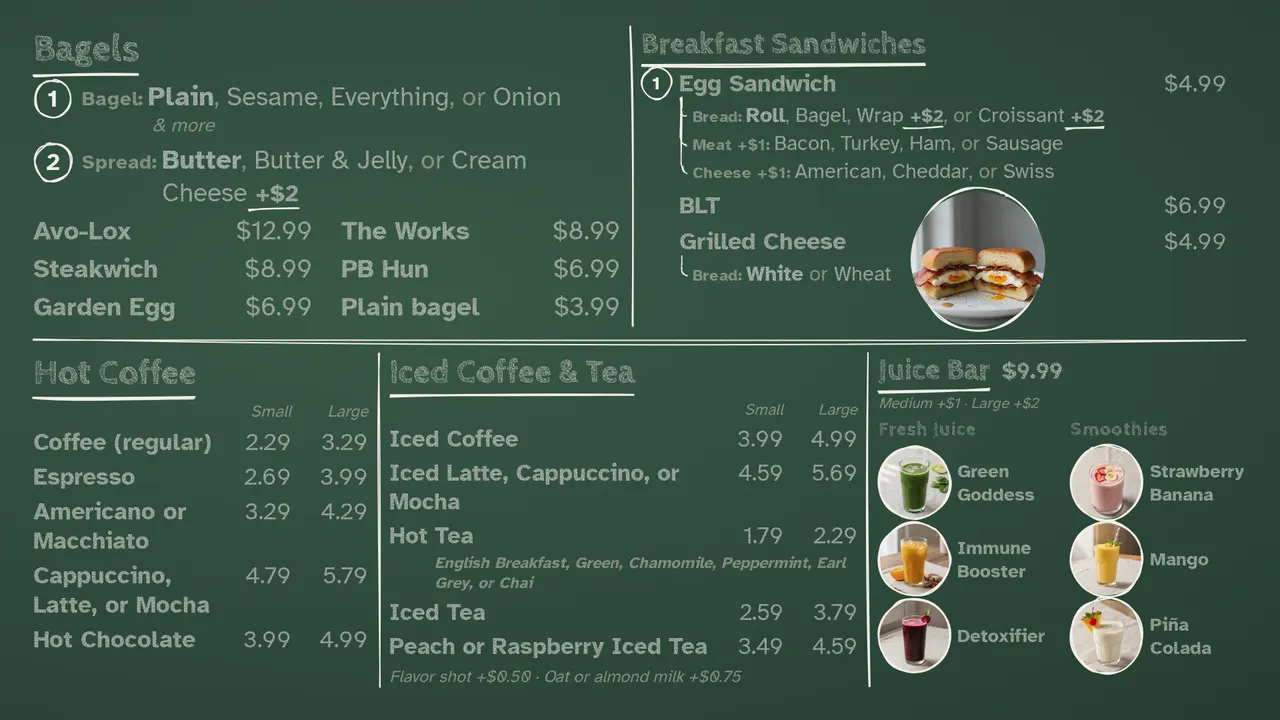
Change a price once in the back office, and every TV menu board in the building picks it up within a minute. Nothing to reprint, nothing to walk over and fix by hand.
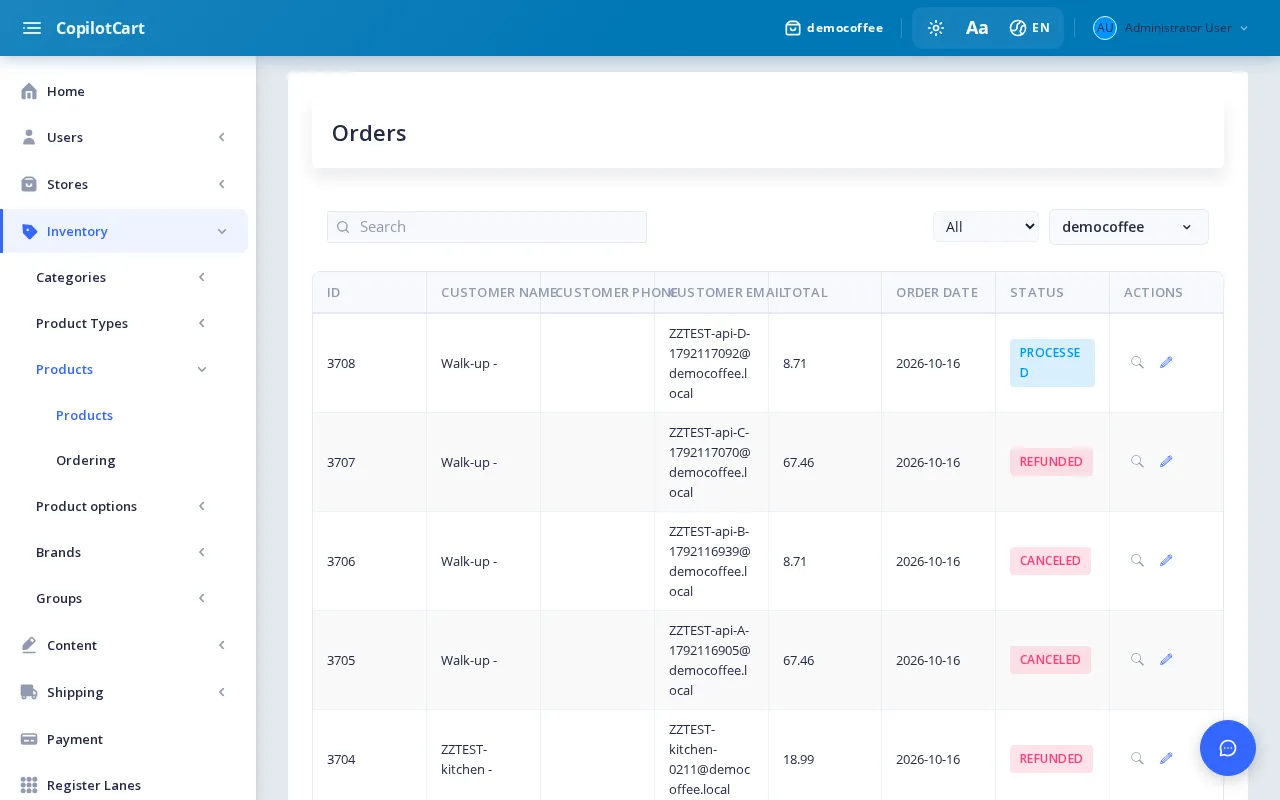
One place sees the order, the money and the tax
Every channel's orders land in the same back office — what was sold, what was paid, and the tax collected on it — instead of three different systems to reconcile by hand.
Take what you need.
A counter without a kitchen
Café or retail: register, online store and TV boards. Nothing is cooked to order, so there is no kitchen screen to run.
A kitchen without a kiosk
Orders arrive by phone or online only. The kitchen screen and the register still work exactly the same way.
Everything
Restaurant or deli counter: kiosk, kitchen screen, register and boards, all reading the same catalog.